Treatment
Getting veneers in Turkey, step by step
What actually happens across the week, the two decisions you make before anything is drilled, and the point of no return.

Veneers are usually a single trip of about a week, which is why they are the most common cosmetic case people travel for. Here is what that week actually looks like, and where in it the decisions that matter get made.
Before you go
Get the plan in writing, tooth by tooth. Veneer or crown for each tooth, and how much reduction is involved. This is the whole ballgame — see the horror stories piece for why.
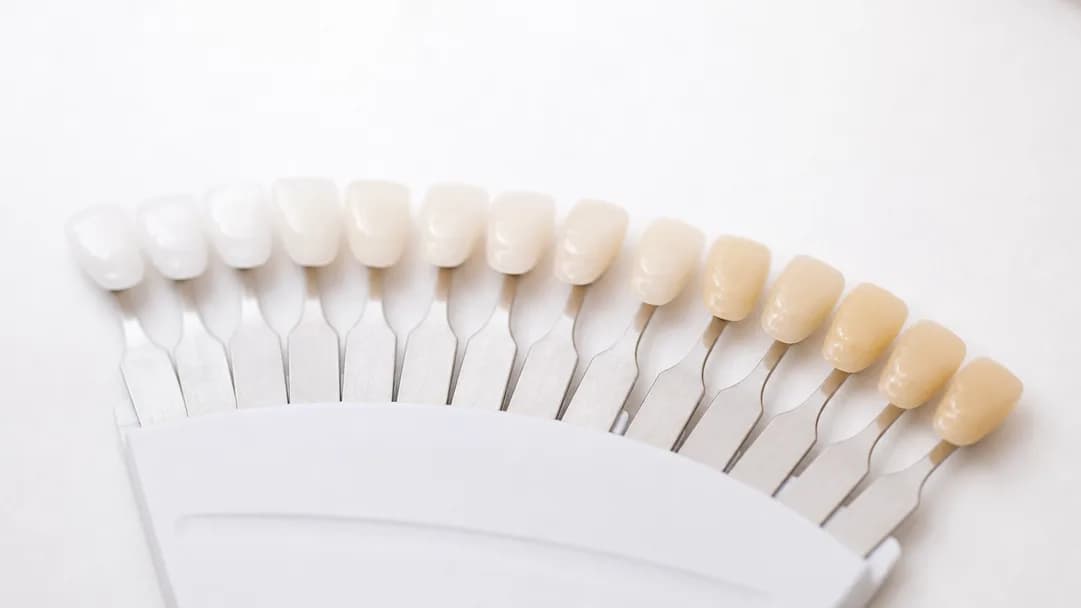
Sort the shade first. Whitening does not work on porcelain. If you want your natural teeth lighter, that happens before veneers are made, so the new ones can be matched to your final shade rather than your current one. Trying to fix this afterwards means remaking the veneers.
Have any decay or gum disease treated. Cosmetic work goes on top of a healthy mouth, not instead of treating an unhealthy one.
Be examined. A photograph does not show a cracked filling under a tooth that is about to be prepared.
Day one: assessment and design
Photographs, scans, and a proper look at your bite — including whether you grind, because that changes both the material and whether you will need a night guard afterwards.
Then the design conversation, which is where you should slow down. Shade, shape, length, and how the edges sit against your lip line. Bring photographs of results you like and results you do not — the second set is more useful than the first, because "not that" is easier to communicate than "something like this".
Expect to be pushed back on. A shade that looks striking in a photograph can look wrong against your own face and gum line, and a clinic that agrees to everything is not doing you a favour.
Day two: the mock-up, and the point of no return
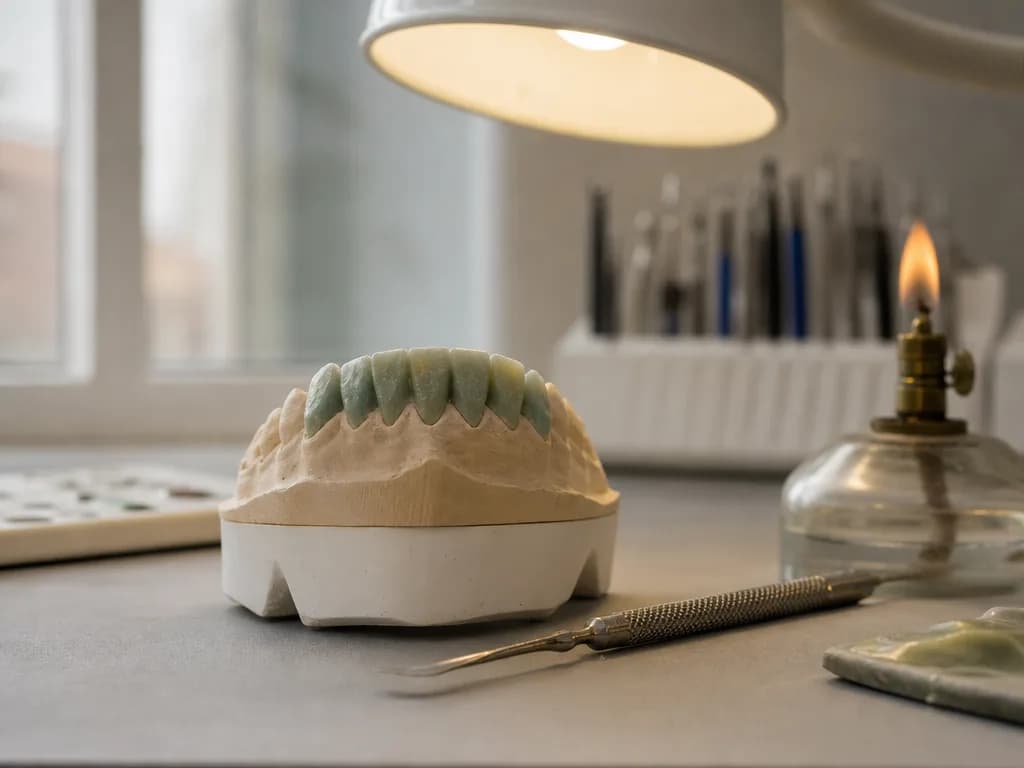
You should see the design before anything is drilled — either digitally or as a physical mock-up placed over your teeth so you can look in a mirror.
Approve it properly. Once preparation starts, changing your mind about length and shape means starting the lab work again, and enamel that has been removed does not come back. This is the last fully reversible moment in the process, and it is worth taking an hour over.
Day three: preparation and temporaries
The teeth are prepared — a small amount of enamel removed from the front surface and the edge — and impressions or a digital scan taken. Temporary veneers go on, so you leave with teeth that look reasonable.
It is done under local anaesthetic. Some sensitivity afterwards is normal while the temporaries are on; hot and cold may be noticeable for a few days.
Live with the temporaries for a day or two and pay attention. They are a preview: if something about the length or shape bothers you, say so now rather than after the porcelain is bonded. Adjusting temporaries is free. Adjusting finals is not.
Days four to six: the lab
Your veneers are made. Clinics with an in-house lab turn this round in days, which is the practical reason single-trip veneer treatment works abroad and is awkward at home, where lab work is usually posted away.
This is your free time. It is also when the swelling from any gum work settles.
Day six or seven: try-in and fitting
The veneers are tried in before they are bonded — usually with a temporary paste so you can see them in place, in daylight, from the angles you actually look at yourself from.
Check them properly at this stage. Shade against your face, length against your lip, symmetry, and how they look when you smile rather than when you are asked to smile. Then they are bonded, the bite is adjusted, and you are done.
Ask for a night guard if you grind. Porcelain is strong but it does not enjoy being ground against for years.
Afterwards
Veneers are cleaned like natural teeth — brushing, flossing, hygienist visits. The margin where porcelain meets tooth is where problems start if plaque sits there, so the hygiene routine matters more than it did before, not less.
Avoid using your front teeth as tools. Bottle caps, packaging and fingernails will find the edge.
How long they last depends on your bite, your gums and your habits. Anyone giving you a precise number of years is guessing.
What to sort out before you fly
Three things, and all of them are cheaper to fix now than mid-trip.
Any dental health problem. Decay, gum inflammation, a tooth that has been twinging. Cosmetic work goes on top of a healthy mouth. A tooth that needs root canal treatment is far better found at a UK examination than discovered once it has been prepared in Antalya.
Whitening, if you want it. Porcelain does not lighten. Whatever shade your natural teeth are when the veneers are matched is the shade they stay, so if you want lighter teeth around the veneers — or you are only treating the upper arch and the lower teeth will show — the whitening comes first. Doing it afterwards means remaking the porcelain.
What you actually want it to look like. Bring photographs, and bring them in both directions: results you like, and results you specifically do not. "Natural" means different things to different people and a laboratory cannot infer it. This conversation is the difference between a smile that looks like yours and a smile that looks like a set.
The materials, and which is which
Veneer is a shape, not a material, and price lists use the word loosely.
E-max (lithium disilicate) is pressed glass-ceramic, and the usual choice for front teeth. Light passes through it much as it does through enamel, which is what makes it convincing next to a natural neighbour. It needs a genuine preparation and is less forgiving of a heavy grinder than zirconia.
Composite is resin shaped directly onto the tooth in the chair, usually with little or no drilling. Cheaper, repairable, effectively reversible — and it stains and wears faster and needs repolishing. A reasonable way to test a shape before committing to porcelain.
Laminate or no-prep veneers are very thin porcelain bonded with minimal reduction. They work where the tooth is already well positioned and only needs colour and small shape changes. On a tooth that already sits proud they produce a bulky result, and a clinic offering them for every case is not assessing the case.
Zirconia crowns sold as veneers are full crowns. Strong, opaque, and a materially different treatment — the tooth is reduced on every side. Legitimate where the tooth genuinely needs a crown; not what you agreed to if the plan said veneers.
What "the point of no return" means
It is worth being exact about this, because the moment passes quietly.
Everything up to and including the mock-up is reversible. The mock-up is a trial shape applied over your existing teeth so you can see the proposal on your own face. Nothing has been removed. If you do not like it, or you have changed your mind about the number of teeth, or you want to think — that is the moment, and it costs you nothing.
Once preparation begins, the enamel is gone. From that point the only questions are which restoration goes on and what it looks like. Not whether.
So use the mock-up properly. Look at it in daylight, not only under the clinic's lights. Photograph it. Smile naturally rather than posing. Ask what the plan is for any tooth you are unsure about. A clinic that treats this as a formality to move past is telling you something.
What you should leave with
Ask for these before you fly home, while everyone is still in the same building:
- Which teeth were treated, and whether each is a veneer or a crown.
- The material and the shade, so a future match is possible.
- The written guarantee — what it covers and for how long.
- Photographs or scans of the work.
- A named UK contact for anything that comes up.
Then register with a UK dentist and get a hygienist appointment in the diary for a few months out. Porcelain does not decay, but the margin where it meets your tooth does, and that margin is the whole long-term hygiene story.
The honest caveat
If your teeth are healthy and reasonably aligned and the problem is really colour, whitening may get you most of the way for a fraction of the cost and without removing any tooth at all. That is worth trying first, and a clinic that suggests it before selling you ten veneers is one worth using for the bigger work later.
Full detail on materials, cost and what is included is on the veneers guide. If you want a per-tooth plan you can take to your own dentist for a second opinion, ask us — that is what putting it in writing is for.