Dental Crowns in Turkey: Zirconia, E-max and UK Prices
Zirconia and E-max crowns — what each is for, and what each costs.
At a glance
- How long it takes
- One trip, usually 5–7 days.
- Best for
- You have a heavily filled, cracked or root-treated tooth
- Priced
- per tooth
A crown covers a whole tooth and is the usual answer when a tooth is too broken down, too heavily filled or too weakened by root canal treatment to be restored with a filling. It is a restorative treatment first and a cosmetic one second.
What dental crowns treatment involves
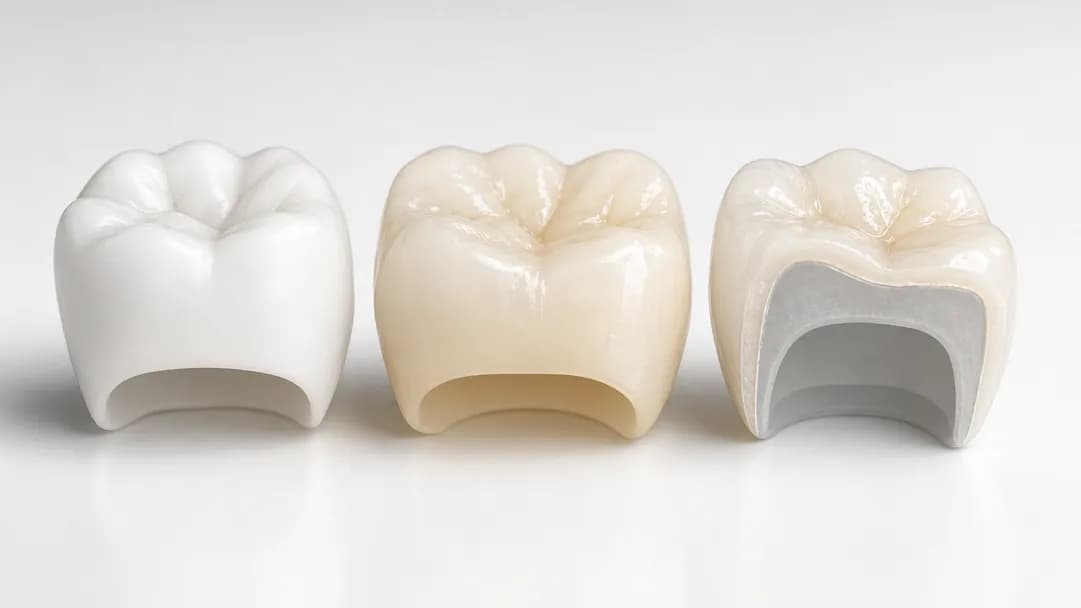
Material choice depends on where the tooth sits. Monolithic zirconia is strong and suits back teeth that take heavy load. E-max (lithium disilicate) is more translucent and generally the better aesthetic choice for front teeth, though it is less suited to a heavy grinder. Layered zirconia sits between the two. A clinic should tell you which material it plans to use on each tooth and why, and should say plainly whether any tooth needs root canal treatment before the crown goes on. Treatment is normally a single trip: preparation and impressions or a scan, temporary crowns, then fitting once the lab work is back.
What you get
- Restores a tooth that a filling can no longer hold together
- Material chosen per tooth — strength at the back, translucency at the front
- Usually one trip
- Priced per unit, written down before you travel
Whether it suits you
- You have a heavily filled, cracked or root-treated tooth
- A filling has failed repeatedly on the same tooth
- You need strength as well as appearance
- You want the material named in the treatment plan
When it is the wrong treatment
- The tooth would hold a filling, an inlay or an onlay — those remove less and are the more conservative answer
- The tooth is sound and the complaint is cosmetic; a veneer removes far less, and whitening removes nothing
- There is untreated decay under the old filling that has not been assessed
- You are flying for one crown alone — the arithmetic rarely works once flights are counted, and we will tell you so
Cost
What dental crowns cost, all in
The whole trip rather than the treatment on its own: flights, hotel and transfers counted alongside the price, against what UK private treatment costs. It has a page of its own, with the calculator, what moves the number, and the cases where travelling does not pay.
- The UK range, with its source and date
- Flights counted once, hotel and transfers on top
- A calculator that will tell you when it is not worth it
Ranges, not quotes. Your own figure is fixed in writing after the UK examination.
Crown materials, tooth by tooth
There is no best crown material, only a best material for a given tooth in a given bite. A plan that uses one material everywhere has not made this decision — it has skipped it.
Monolithic zirconia
Milled from a single block of zirconia with nothing layered on top, so there is no porcelain to chip off.
- Best for
- Back teeth, heavy bites, grinders, and long bridges where strength decides everything.
- Trade-off
- More opaque than glass-ceramic. On a front tooth next to a natural one, the difference can be visible.
E-max (lithium disilicate)
Pressed glass-ceramic with the translucency of enamel — light passes through it in much the same way.
- Best for
- Front teeth, and anywhere matching a neighbouring natural tooth is the hard part of the job.
- Trade-off
- Not the material for a molar in a heavy grinding bite. Strong, but zirconia is stronger.
Layered zirconia
A zirconia core with porcelain layered over it for appearance — the compromise between the two above.
- Best for
- Front teeth where extra strength is wanted, and visible units on longer bridges.
- Trade-off
- The layered porcelain can chip off the core. Repairing that properly usually means remaking the crown.
Metal-ceramic (PFM)
The older standard: porcelain fused to a metal substructure. Still used, and still perfectly serviceable.
- Best for
- Situations where cost is decisive and the tooth is not in the smile line.
- Trade-off
- A dark line can appear at the gum margin as gums recede, and it lacks the translucency of the ceramics above. If it is being proposed for a front tooth, ask why.
How long dental crowns take, day by day
Typical timings for a straightforward case. Your own dates come out of the written plan after the UK examination — this is what to budget annual leave against.
Before you fly
Stage 1 of 5UK examination and X-rays
The point of this appointment for crowns specifically is to find out whether the nerve is healthy. A tooth needing root canal treatment first changes the plan, and finding that out in the UK is much better than finding it out mid-trip.
Trip 1 · day 1
Stage 2 of 5Consultation, imaging and material chosen per tooth
Which crown goes on which tooth, and why. Shade is agreed with you now rather than assumed.
Trip 1 · day 2
Stage 3 of 5Preparation, scan and temporary crowns
The tooth is prepared under local anaesthetic and scanned or impressed, and a temporary crown protects it while the laboratory works.
Trip 1 · days 3–4
Stage 4 of 5The laboratory makes them
Two or three working days. This waiting stage is the reason a crown trip is a week rather than a long weekend.
Trip 1 · days 5–7
Stage 5 of 5Fit, bite check and cementation
Tried in for fit, contact and shade before cementing. The bite is checked and adjusted — the step most often rushed, and the one that decides whether the crown feels right in a month.
Stage by stage
What dental crowns actually involves
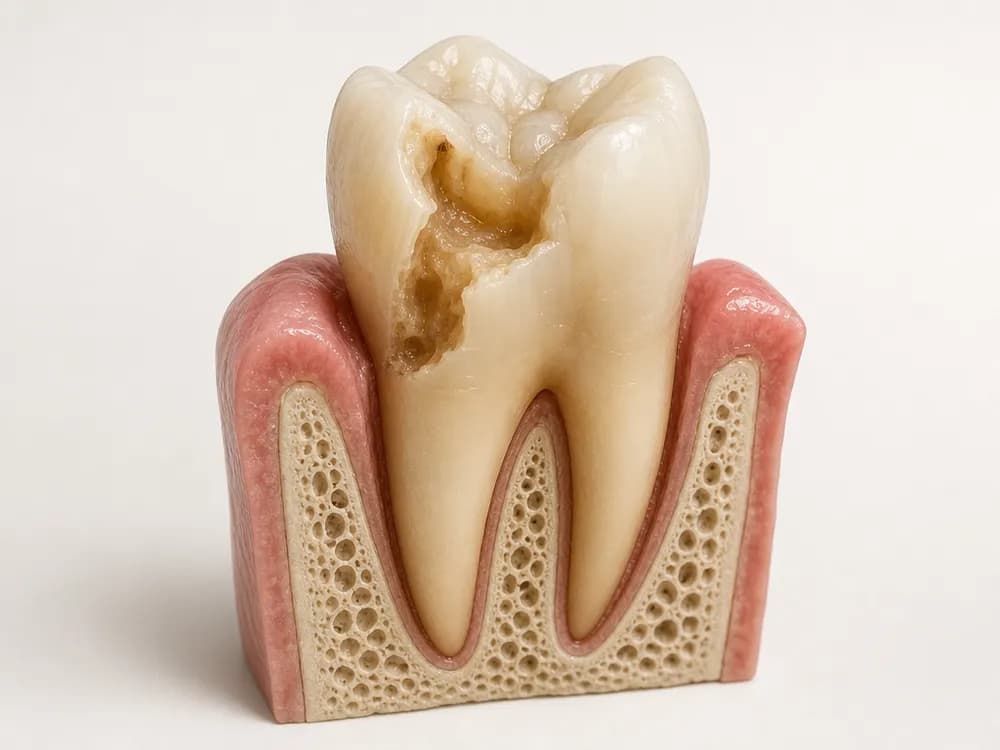
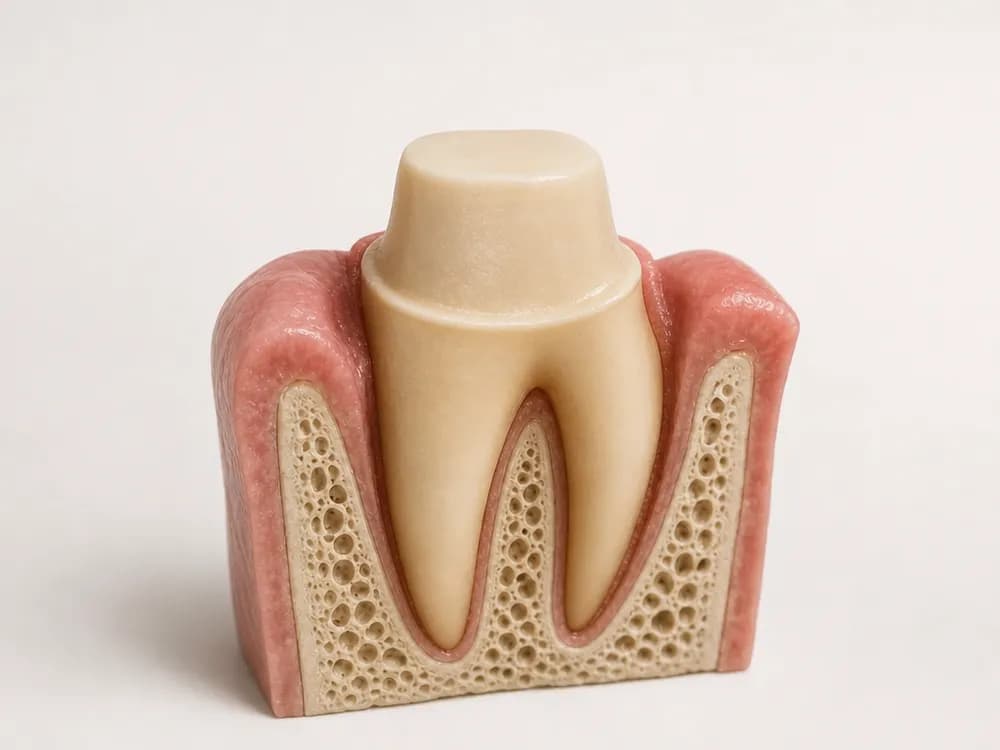
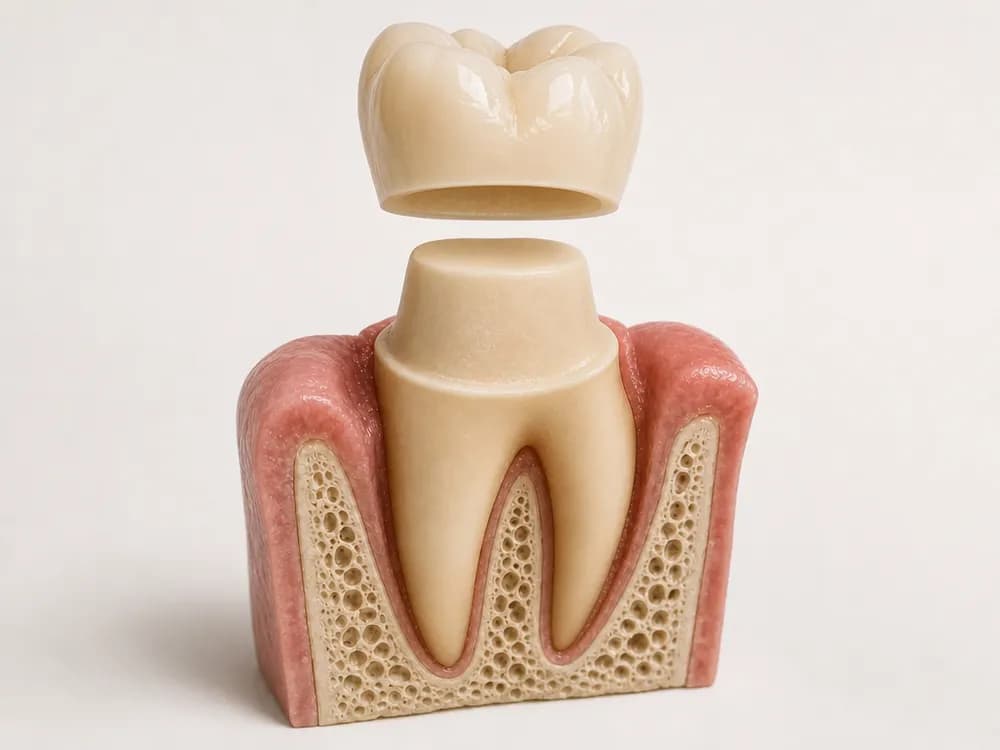
The same schedule as above, shown rather than described. Four stages, on anatomical models — nothing here is a photograph of a patient or of a result.
Trip 1 · day 1
Step 1: A tooth that cannot be filled again
A crown is for a tooth with too little structure left to hold a filling — usually after a fracture or a root canal. If a filling would still work, it should have one.
Trip 1 · day 2
Step 2: It is prepared on every side
Reduced all round into a tapered stump with a clean margin at the gum. This is the difference from a veneer, and it is why the two words should never be used interchangeably in a quote.
Trip 1 · days 3–4
Step 3: The crown is made
Hollow, like a thimble, in zirconia or porcelain depending on where the tooth sits and how hard you bite on it. You wear a temporary while it is built.
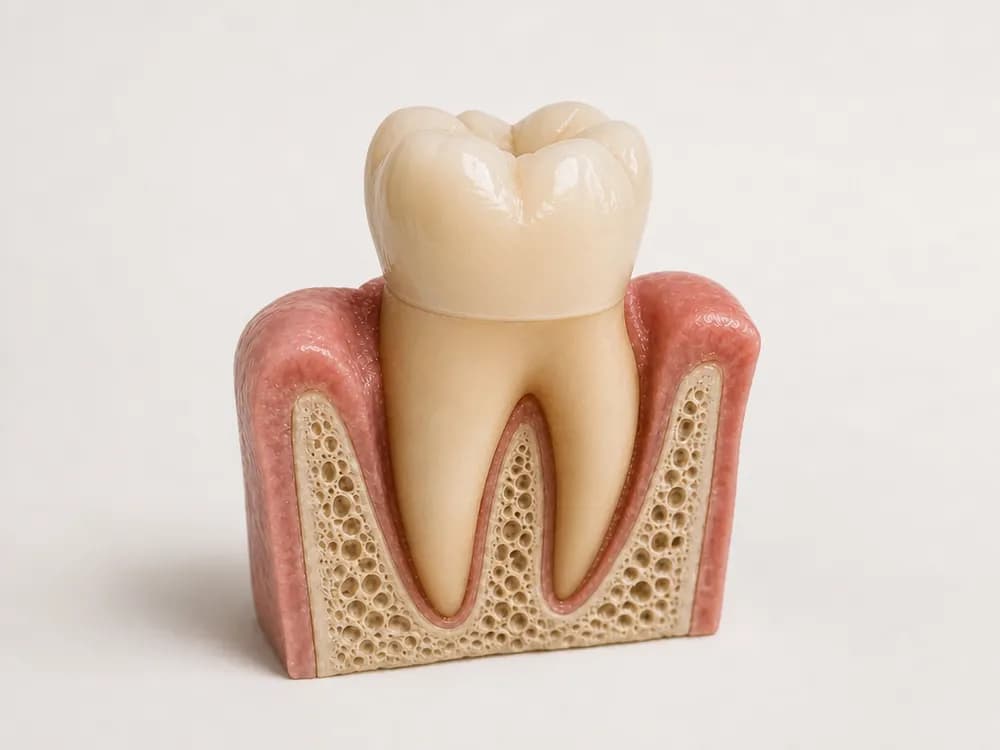
Trip 1 · days 5–7
Step 4: Fitted and cemented
Checked for fit at the margin, adjusted against the opposing tooth, then cemented. A high crown you can feel on the bite is the most common thing that needs a second visit.
Medical renders of the stages of the procedure, on anatomical models. Not photographs of a patient, and not a before-and-after — no result shown here belongs to anyone. Your own case is planned at the UK examination.
Real cases
Ballıpınar's own patients, before and after
Photographs, not renders — published by the clinic itself. What we know about each case is written under it, and so is what we don't.
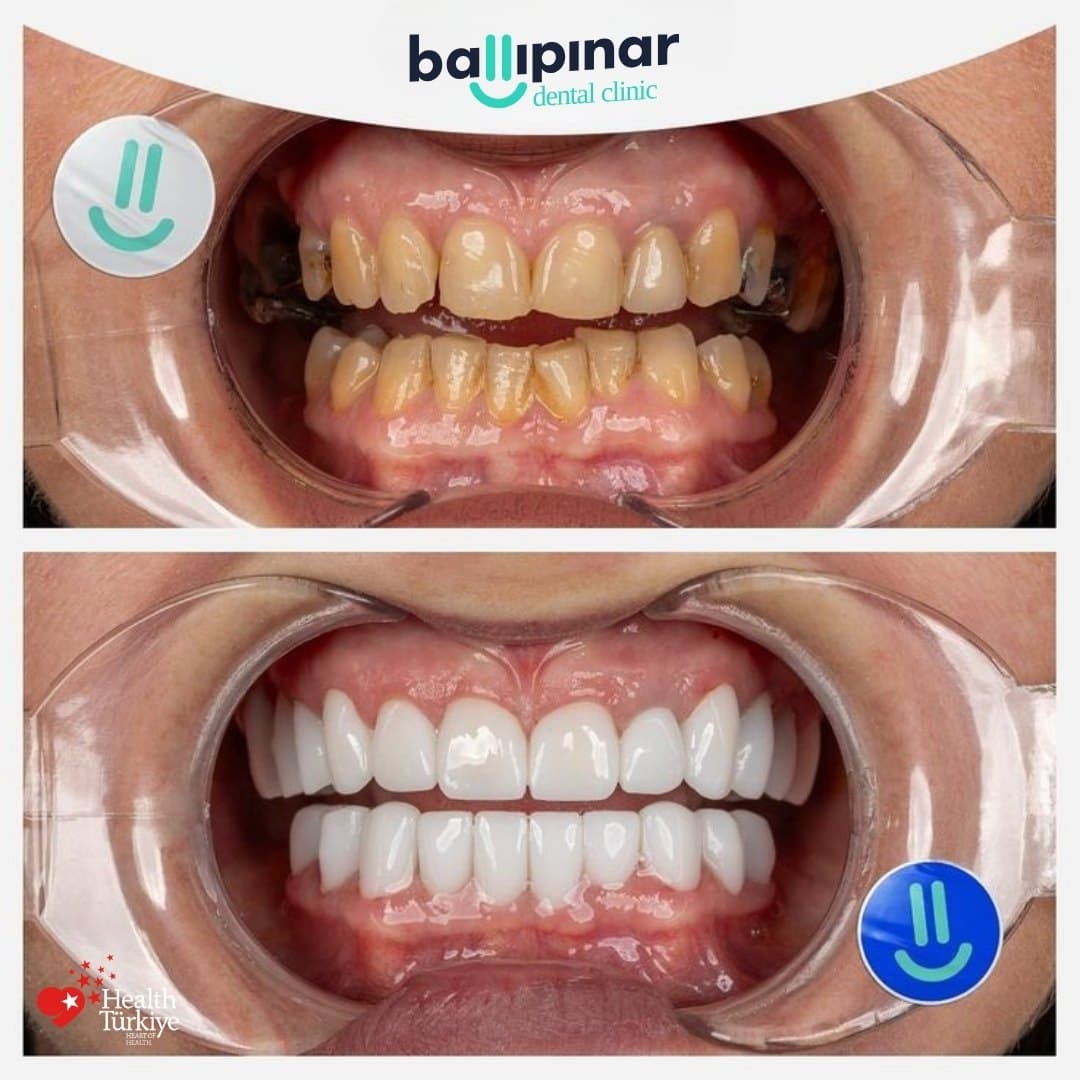
Before: Heavily discoloured, decayed front teeth. 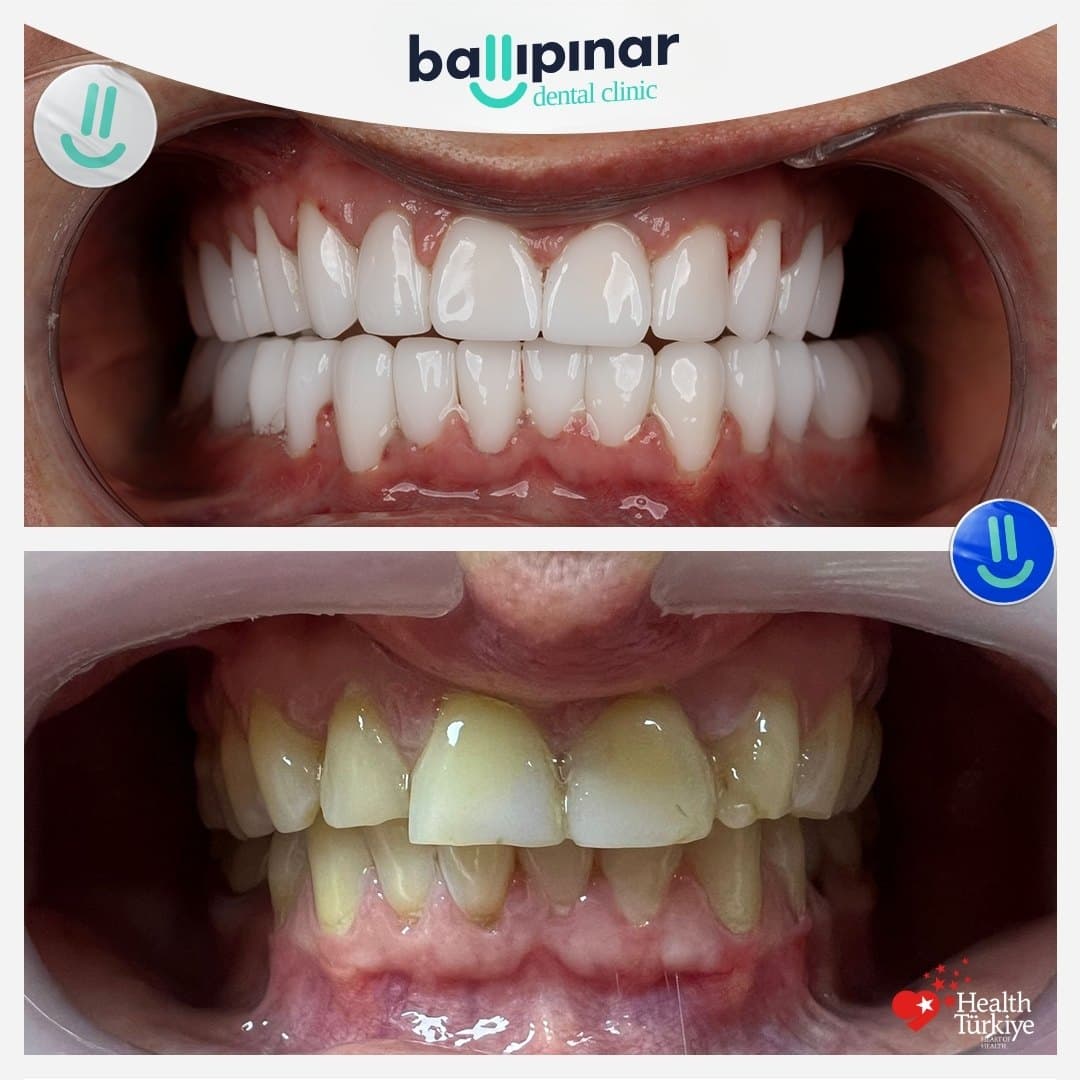
Before: Discoloured, worn front teeth.
Ballıpınar's own patients, published by Ballıpınar. Mirrored on 18 August 2026 (original eight) and 18 September 2026 (nine more, by treatment) from Ballıpınar Dental Centre's own published case gallery. Nothing on this page is generated, and no other clinic's photographs appear anywhere on this site.
What we cannot tell you about them. The clinic's gallery carries no case notes, so we do not know which materials were used in each case, how long after treatment the second photograph was taken, or whether either photograph was edited. We would rather say that than imply a timescale nobody has confirmed.
2 cases, not a typical result. What is achievable depends on your own teeth, gums and bone, and is assessed at the UK examination — not from a photograph of somebody else. Some people are told a smaller job would suit them better, and some are told to have gum treatment first.
How it works
From your UK examination to Antalya
We see you in person in the UK before anything is booked. It's the step that turns a photograph-based estimate into a plan.
Send us photos and any X-rays you have
OnlineA few photos of your teeth and whatever your UK dentist has already given you. We come back with an idea of what's possible and a ballpark cost — free, and with no obligation to go further.
See us in person in the UK
In the UKWe examine you face to face at a clinic in the UK before anything is booked. It's the step that lets us plan properly rather than guess from a photograph, and it means you meet someone before you commit to flying.
Get a written plan with a fixed price
In the UKTooth by tooth: what's being done, which materials, how many trips, and what the total is. Nothing on it changes once you've agreed it, and anything not included is listed as not included.
Fly to Antalya
In AntalyaYou book the flights; we arrange the airport transfer and hotel. Your coordinator has your schedule and meets you on arrival.
Treatment at the clinic
In AntalyaCarried out by the dental team at Ballıpınar in Antalya, to the plan you signed off. Your coordinator stays with you across appointments.
Recovery, and how long dental crowns last
A crown is a restorative appointment, not surgery. The things worth knowing are all about the temporary and the bite.
- While in the temporary
- Temporary crowns come off — that is what temporary cement is for. Avoid sticky food, and floss by pulling the thread out sideways rather than up. Some sensitivity to cold is normal.
- First week after fitting
- Mild sensitivity, especially if the tooth is still alive. The bite should feel level; if one tooth meets first, get it adjusted rather than waiting for it to settle.
- Ongoing
- Crowned teeth still decay at the margin, which is where the crown meets the tooth. That margin is the whole hygiene story — brush it, floss it, and see a hygienist.
- Call someone if…
- You get a throbbing ache or pain on biting after fitting — that can mean the nerve is inflamed and the tooth needs root canal treatment. Sensitivity that increases rather than settles is worth a call too.
How long it lasts
Crowns fail at their edges rather than in the middle. The ceramic itself is durable — what tends to end a crown's life is decay at the margin where it meets your tooth, or the nerve of the tooth underneath giving up and needing root canal treatment through the crown. That means the deciding factors are hygiene, a bite that has been adjusted properly, and a night guard if you grind. It also means a crown fitted well in Antalya and a crown fitted well in Leeds have the same enemies, and neither comes with a lifespan that anyone can promise you honestly.
What can go wrong with dental crowns, and what reduces it
Every item here can happen in a UK practice too. What travelling changes is how easily it gets sorted out — which is the reason this site puts a UK examination in front of a flight.
The nerve dying after preparation
It happens on heavily filled teeth wherever the crown is made. Being X-rayed and assessed properly beforehand catches most of it, and the plan should say what happens — clinically and financially — if it is found.
A crown fitted where an onlay would have done
Ask whether a partial-coverage restoration is possible. It removes less tooth, and it is a fair question that a good clinician will answer straight.
A high bite that is never adjusted
Do not fly home the same afternoon a crown is cemented if it does not feel level. It is a five-minute adjustment there and an awkward conversation at home.
Decay at the margin later
Flossing the crown edge and a hygienist appointment at home. This is what actually ends most crowns, and it is preventable.
A visible dark margin on a front tooth
A ceramic rather than a metal-ceramic crown at the front, and a shade chosen against the neighbouring tooth in daylight.
“Will a UK dentist touch it when I get home?”
It is the most asked question about dental treatment abroad, and the answer is more practical than most of the arguing suggests. UK dentists are not refusing work on principle. They are refusing to guarantee treatment they did not carry out and cannot identify — and on that, they are right. A dentist asked to adjust a crown needs to know what it is made of; asked to service an implant, they need the system and the part numbers.
So the thing that decides how this goes for you is paperwork, and it is settled before you fly rather than after. You leave with the materials named, the components identified, your radiographs and a written guarantee that says what is covered and for how long. And because we examine you in the UK before anything is booked, there is a named person here to call — not only a WhatsApp number in another time zone.
Crowns are the least controversial treatment on this list to have looked after at home — a crowned tooth is checked and cleaned like any other. Take the material and shade home in writing, and get the margins checked at your first UK hygienist appointment.
This answer applies to dental crowns treated at our Antalya clinic.
When dental crowns are not the answer
We would rather lose the enquiry than sell you the wrong treatment. Any of these can be the better call, and the UK examination is where that gets decided.
An inlay or onlay
When enough sound tooth remains. It rebuilds the damaged part and leaves the rest, which is always the better trade where it is possible.
A large filling
When the tooth is not structurally compromised. Cheaper, quicker and removes nothing extra — although a repeatedly failing filling is the sign it has stopped being the answer.
A veneer
When the problem is cosmetic and the tooth is sound. Far less tooth removed than a crown.
Extraction and an implant
When the tooth is cracked below the gum or has too little structure left to restore. Crowning a tooth that cannot be saved buys a short delay at full price.
| Treatment | Trips | Time in Antalya | Cost |
|---|---|---|---|
| ImplantsSurgical | Two | Two trips. Roughly 3–5 days for placement, then 3–7 days for the crown after healing — usually 3–6 months apart. | See costs |
| VeneersCosmetic | One | One trip, usually 5–7 days from preparation to fitting. | See costs |
| All-on-4Surgical | Two | Two trips. Around 7–10 days for surgery and the temporary bridge, then 5–7 days for the final bridge 3–6 months later. | See costs |
| All-on-6Surgical | Two | Two trips. Around 7–10 days for surgery, then 5–7 days for the final bridge 3–6 months later. | See costs |
| Hollywood SmileCosmetic | One | One trip, usually 6–8 days. | See costs |
| CrownsThis pageRestorative | One | One trip, usually 5–7 days. | Costs in full |
| WhiteningPreventive | One | One trip, 1–3 days — often combined with other treatment. | See costs |
Where people travel from
Each of these pages works out what dental crowns would cost from that town — the treatment, plus the return flight from the airport we route the town through, counted once for every trip the treatment needs. The UK prices they compare against are national ranges rather than any one town's.
Common questions
Will a UK dentist work on crowns fitted in Turkey?
Yes, and this is the treatment where it is least of an issue. A crown is a familiar restoration and your dentist can examine, clean and if necessary replace it whatever country made it. The useful thing to bring home is the material and shade, so a future match is straightforward. As with any work done elsewhere, a UK practice will not guarantee it — that is what your written guarantee from the clinic is for.
Zirconia or E-max?
Zirconia for strength — back teeth, heavy bites, long bridges. E-max for translucency at the front, where matching the neighbouring teeth matters more than raw strength. Good clinics mix both in the same mouth for exactly this reason.
How much do crowns cost in Turkey compared with the UK?
Considerably less per unit, for the same reasons as every other treatment on this site: wages, premises, laboratory fees and the exchange rate. The catch is arithmetic rather than clinical — flights and a week's accommodation are a fixed cost that does not scale with the number of crowns, so one or two units rarely justify a trip while a larger plan easily can. Our calculator does that sum with your departure airport in it rather than leaving you to guess.
Will I need root canal treatment first?
Sometimes. If the nerve is already inflamed or the tooth is very heavily broken down, the tooth is root-treated before the crown. This should be identified on the treatment plan rather than discovered mid-trip — another reason the UK consultation and X-rays come first.
How long do you have to stay in Turkey for crowns?
Five to seven days for a normal case. Preparation and temporaries early in the week, two or three working days for the laboratory, then fitting and bite adjustment at the end. Do not book a flight for the same afternoon a crown is cemented — leave a day for adjustment.
How long do crowns last?
Longer than most people expect, and what ends them is usually the tooth rather than the crown: decay at the margin, or the nerve needing treatment later. Cleaning the crown edge and a night guard if you grind do more for the outcome than the material choice does. Nobody can promise you a number of years.
What is the difference between a crown and a veneer?
A crown covers the whole tooth and requires it to be reduced on every side; a veneer faces the front and takes around half a millimetre. Crowns are for teeth that are structurally compromised, veneers are for sound teeth being changed cosmetically. Both are legitimate — the problem is only when one is sold under the other's name.
No obligation
Find out what your treatment would actually cost
Send us a few details and we'll come back within a working day with what's involved and what it costs. We examine you in the UK before anything is booked.
We'll tell you if you're better off treated at home.