Veneers in Turkey: Cost, Types and Tooth Shaving
A straight answer on price, on how much tooth gets removed, and on when a veneer is the wrong treatment.
At a glance
- How long it takes
- One trip, usually 5–7 days from preparation to fitting.
- Best for
- Your teeth are healthy but discoloured, chipped, worn or slightly uneven
- Priced
- per tooth
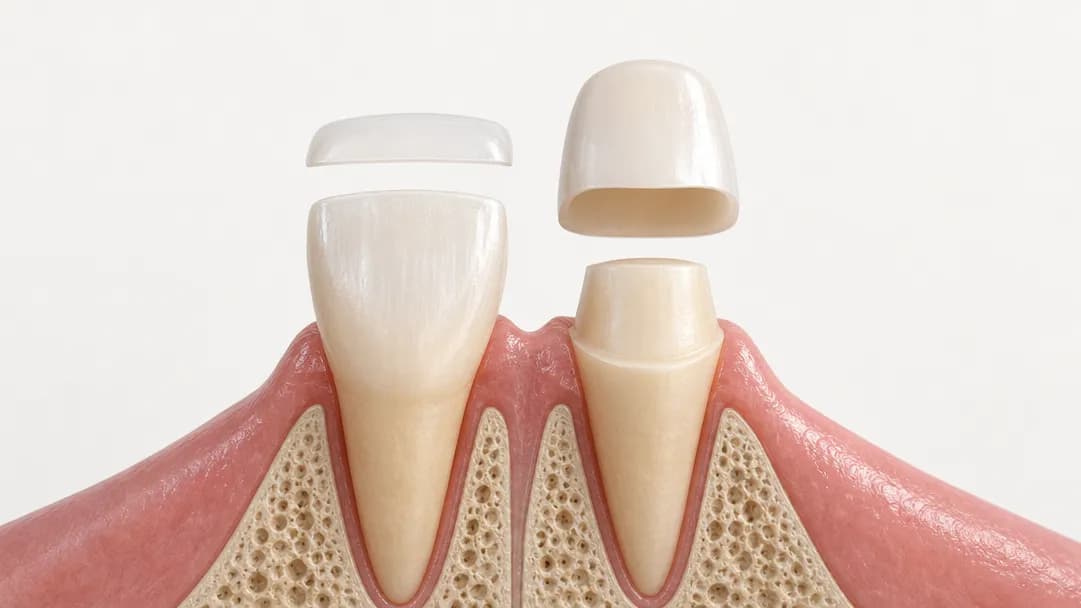
A veneer is a thin porcelain facing bonded to the front of a tooth to change its colour, shape or alignment. Done well, it is conservative — a small amount of enamel is prepared and the tooth underneath stays alive. The reason veneers have a mixed reputation in the UK press is that some clinics abroad fit crowns and call them veneers, which means far more of the tooth is drilled away.
What veneers treatment involves
The distinction matters more than the price. A genuine veneer covers the front surface and part of the biting edge, and typically removes around half a millimetre of enamel. A crown covers the whole tooth and requires the tooth to be reduced on every side. If you are quoted twenty 'veneers' after a five-minute look at a photograph, ask specifically whether the plan is veneers or crowns, how much tooth reduction is involved, and whether any teeth need root canal treatment first. A clinic that answers those three questions plainly is worth talking to. Treatment itself is usually a single trip: the teeth are prepared, temporaries are fitted, the lab makes the porcelain, and the final veneers are bonded before you fly home.
What you get
- Changes colour, shape and small alignment problems in one course of treatment
- Porcelain resists staining better than composite bonding
- Usually completed in one trip
- Conservative when they are genuinely veneers rather than crowns
Whether it suits you
- Your teeth are healthy but discoloured, chipped, worn or slightly uneven
- Whitening has not given you the result you want
- You are not grinding your teeth heavily, or you will wear a night guard
- You want a cosmetic change and understand it is irreversible
When it is the wrong treatment
- Your teeth are significantly crooked — that is an orthodontic problem, and drilling healthy teeth to fake straightness is the trade the horror stories are made of
- You have untreated decay or active gum disease, which have to be dealt with first
- You grind heavily and will not wear a night guard; porcelain does not negotiate with a bite that strong
- What is actually bothering you is the shade, and whitening alone would have done it
Cost
What veneers cost, all in
The whole trip rather than the treatment on its own: flights, hotel and transfers counted alongside the price, against what UK private treatment costs. It has a page of its own, with the calculator, what moves the number, and the cases where travelling does not pay.
- The UK range, with its source and date
- Flights counted once, hotel and transfers on top
- A calculator that will tell you when it is not worth it
Ranges, not quotes. Your own figure is fixed in writing after the UK examination.
Veneer types, and what each one removes
"Veneers" covers four quite different treatments in Turkish price lists, and the cheapest and the dearest are not the same procedure. The column that matters is the last one: how much of your own tooth you do not get back.
E-max (lithium disilicate) veneers
Pressed glass-ceramic, the usual choice for front teeth. Translucent enough to pass for enamel, which is why it is the material most often asked for by name.
- Best for
- Front teeth where matching a neighbouring natural tooth matters more than raw strength.
- Trade-off
- Less suited to a heavy grinder than zirconia, and it needs a genuine preparation — around half a millimetre of enamel.
Composite veneers or bonding
Tooth-coloured resin shaped directly onto the tooth in the chair, usually with little or no drilling.
- Best for
- Small chips, edges and a reversible way to try a shape before committing to porcelain.
- Trade-off
- Stains and wears faster than porcelain and needs repolishing. It is cheaper for a reason, and it is not the same product some clinics sell it alongside.
Laminate or "no-prep" veneers
Very thin porcelain bonded with minimal or no tooth reduction.
- Best for
- Teeth that are already well positioned and only need colour and small shape changes.
- Trade-off
- Only works where the tooth is not being brought forward. On a tooth that already sits proud it produces a bulky result, and a clinic that offers it for every case is not assessing the case.
Zirconia crowns sold as veneers
Full crowns covering the whole tooth, offered under the veneer heading. Strong, opaque, and a materially different treatment.
- Best for
- Teeth that genuinely need a crown — already heavily filled, root-treated or broken down.
- Trade-off
- The tooth is reduced on every side, not just the front, and it cannot be undone. If a plan for healthy teeth is quoted as crowns, ask why in writing before you agree to anything.
How long veneers take, day by day
Typical timings for a straightforward case. Your own dates come out of the written plan after the UK examination — this is what to budget annual leave against.
Before you fly
Stage 1 of 5UK examination, photographs and the shade conversation
We look at your teeth, your gum line and your bite in person, and we agree what is actually being treated and with which material. Whitening, if you want it, happens before the porcelain is matched — never after.
Trip 1 · day 1
Stage 2 of 5Consultation, X-rays and a mock-up
The plan is confirmed tooth by tooth. You should be able to see a digital design or a physical mock-up of the proposed shape and shade before a drill is touched, and you should be willing to say no to it.
Trip 1 · day 2
Stage 3 of 5Preparation and temporaries
The teeth are prepared under local anaesthetic and scanned or impressed, and temporary veneers are fitted. The temporaries are your dress rehearsal — say now if the shape is not right.
Trip 1 · days 3–5
Stage 4 of 5The laboratory makes them
Two or three working days for the ceramist. This is the part of the trip that people spend in Antalya rather than in the chair, and it is why the stay is a week rather than a weekend.
Trip 1 · days 6–7
Stage 5 of 5Try-in, bonding, then home
The veneers are tried in before they are bonded, so shade and shape can still be changed. Once bonded, the bite is checked and adjusted, and you are given a night guard if you grind.
Stage by stage
What veneers actually involves
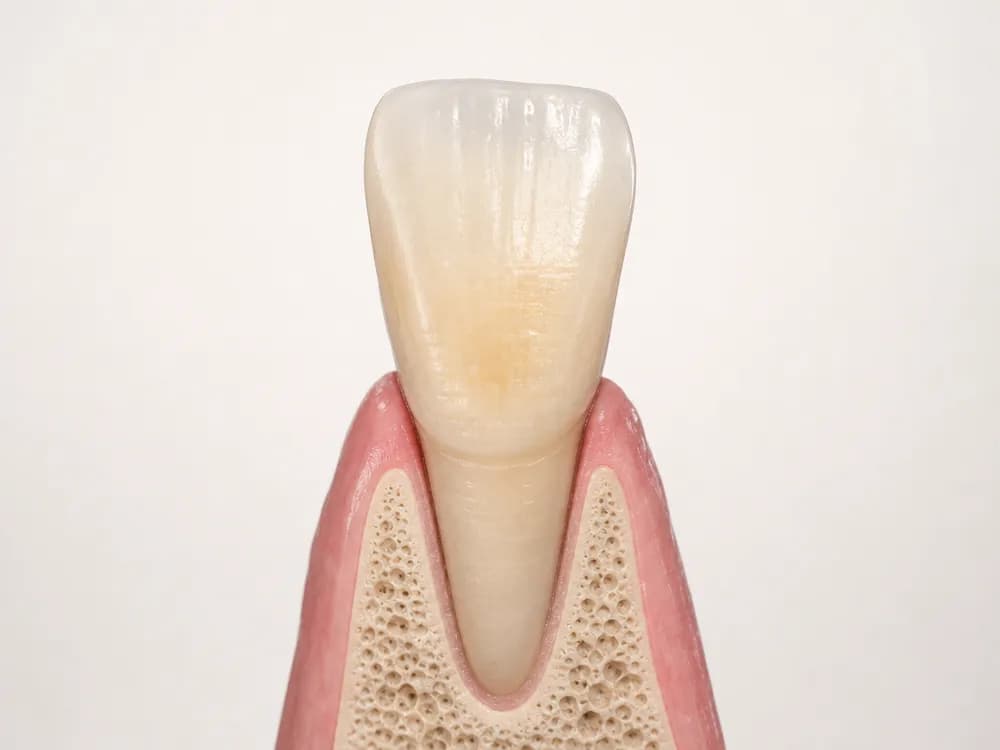
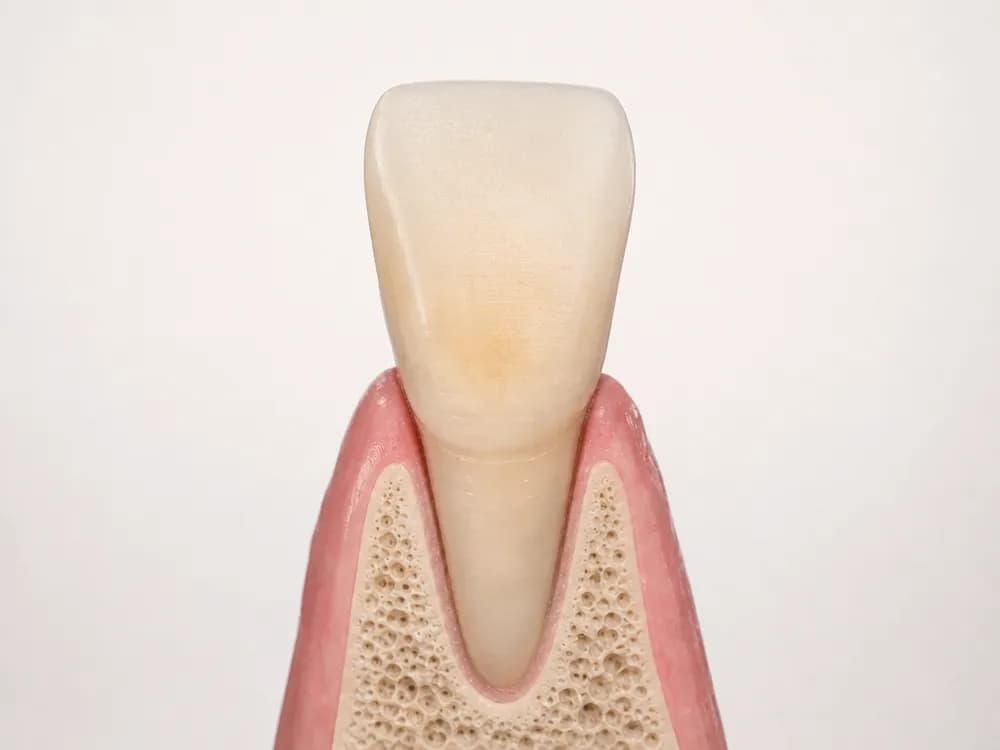
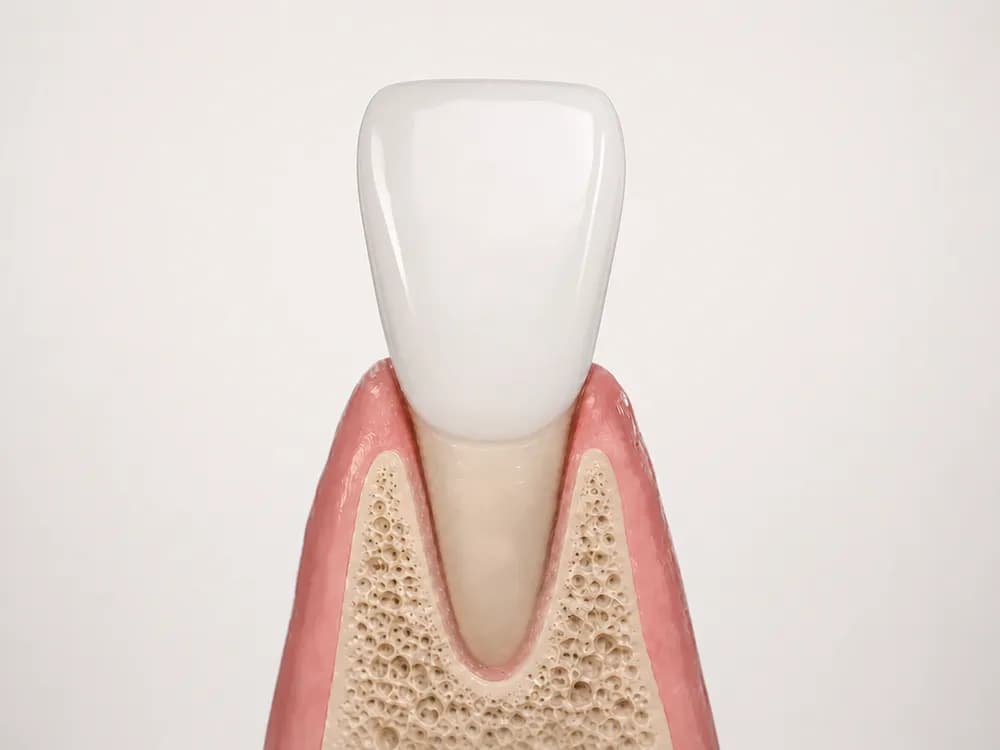
The same schedule as above, shown rather than described. Four stages, on anatomical models — nothing here is a photograph of a patient or of a result.
Trip 1 · day 1
Step 1: The tooth as it is
Veneers are a facing, so the starting point matters: there has to be enough sound enamel to bond to. That is one of the things the UK examination is for.
Trip 1 · day 2
Step 2: A thin layer comes off the front
Well under a millimetre, from the front face only. The tooth keeps its height, its biting edge and its whole back and sides. This is the step that makes veneers different from crowns, and it is irreversible.
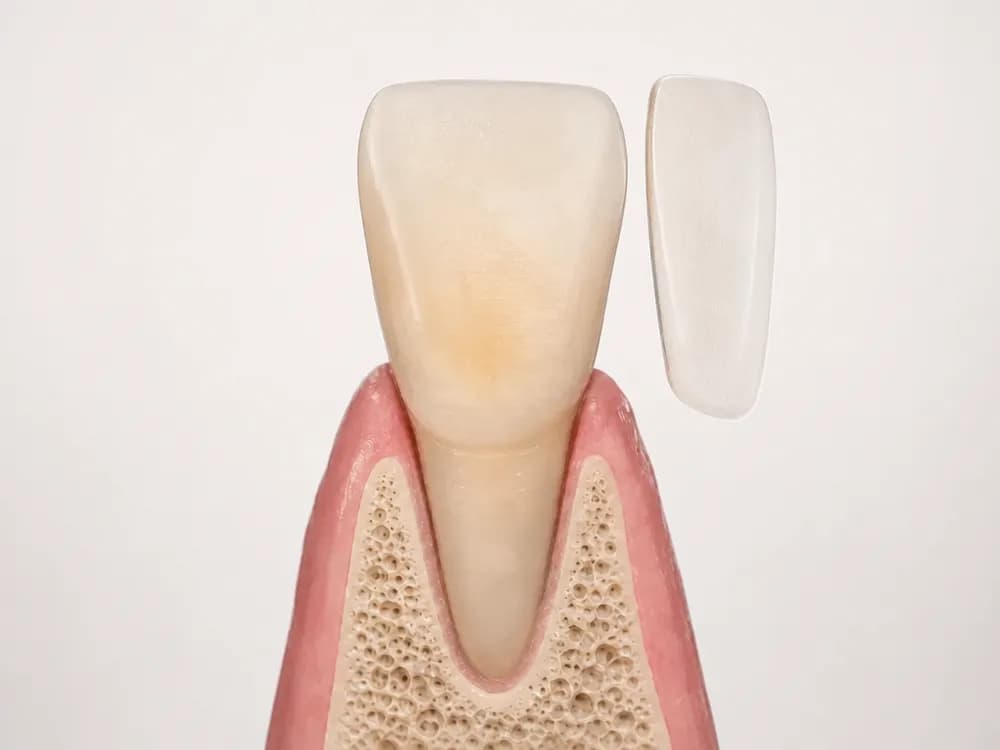
Trip 1 · days 3–5
Step 3: The laboratory makes it
A ceramic facing about as thick as a contact lens, made to the shade agreed before you flew. This is the part of the week where nothing happens to you.
Trip 1 · days 6–7
Step 4: It is bonded on
Tried in first, adjusted, then bonded. Done properly the join at the gum line is invisible and the edge stays translucent like enamel.
Medical renders of the stages of the procedure, on anatomical models. Not photographs of a patient, and not a before-and-after — no result shown here belongs to anyone. Your own case is planned at the UK examination.
How it works
From your UK examination to Antalya
We see you in person in the UK before anything is booked. It's the step that turns a photograph-based estimate into a plan.
Send us photos and any X-rays you have
OnlineA few photos of your teeth and whatever your UK dentist has already given you. We come back with an idea of what's possible and a ballpark cost — free, and with no obligation to go further.
See us in person in the UK
In the UKWe examine you face to face at a clinic in the UK before anything is booked. It's the step that lets us plan properly rather than guess from a photograph, and it means you meet someone before you commit to flying.
Get a written plan with a fixed price
In the UKTooth by tooth: what's being done, which materials, how many trips, and what the total is. Nothing on it changes once you've agreed it, and anything not included is listed as not included.
Fly to Antalya
In AntalyaYou book the flights; we arrange the airport transfer and hotel. Your coordinator has your schedule and meets you on arrival.
Treatment at the clinic
In AntalyaCarried out by the dental team at Ballıpınar in Antalya, to the plan you signed off. Your coordinator stays with you across appointments.
Recovery, and how long veneers last
There is no surgery here, so recovery is about sensitivity and getting used to a new shape rather than about healing.
- While you are in temporaries
- Temporaries are more fragile than the finished veneers and their edges are less precise. Avoid hard and sticky food, floss carefully downwards rather than pulling up, and expect them to feel bulkier than the finished result.
- First week after bonding
- Sensitivity to cold and to pressure is normal and settles. Your speech may feel slightly different for a few days while your tongue learns a new edge.
- Ongoing
- Veneered teeth are cleaned like any other, with attention to the gum margin where the porcelain meets the tooth. A night guard if you grind is not an upsell — it is the single thing most likely to decide how long they last.
- Call someone if…
- Sensitivity is getting worse rather than better after the first week or two, the bite feels high on one tooth, or a gum stays sore and inflamed at one margin.
How long it lasts
Porcelain veneers are generally expected to last many years, and what decides it is your bite, your gums and whether you wear a guard if you grind — not the country they were made in. What does not last forever is the bond and the margin: veneers can chip, and the join at the gum line can stain or leak if it is not cleaned. When a veneer eventually fails, the honest thing to understand is that the tooth underneath has already been prepared, so the choice at that point is another veneer or a crown, not going back to your own enamel. That is the real reason to be sure before you start, and the reason we would rather talk someone out of twenty veneers than sell them.
What can go wrong with veneers, and what reduces it
Every item here can happen in a UK practice too. What travelling changes is how easily it gets sorted out — which is the reason this site puts a UK examination in front of a flight.
Getting crowns when you asked for veneers
Have the plan written tooth by tooth, naming veneer or crown for each one, before any deposit. It is irreversible, so it is worth being awkward about.
A shade that looks obviously artificial
Agree the shade against your face and gum line in daylight, from photographs of results you like and results you do not, and insist on a try-in before bonding.
A tooth needing root canal treatment after preparation
It happens when a tooth was closer to the nerve than it looked. Ask what the plan and the price do in that event before you travel — an honest clinic has an answer ready.
Gum irritation at the margins
Usually a fit or hygiene problem rather than bad luck. Do not fly home without the margins checked, and get a hygienist appointment booked at home for a few months later.
Chipping
A night guard if you grind, and a bite that has actually been adjusted rather than declared fine. Both should be part of the treatment, not extras.
“Will a UK dentist touch it when I get home?”
It is the most asked question about dental treatment abroad, and the answer is more practical than most of the arguing suggests. UK dentists are not refusing work on principle. They are refusing to guarantee treatment they did not carry out and cannot identify — and on that, they are right. A dentist asked to adjust a crown needs to know what it is made of; asked to service an implant, they need the system and the part numbers.
So the thing that decides how this goes for you is paperwork, and it is settled before you fly rather than after. You leave with the materials named, the components identified, your radiographs and a written guarantee that says what is covered and for how long. And because we examine you in the UK before anything is booked, there is a named person here to call — not only a WhatsApp number in another time zone.
Veneers are the treatment UK dentists are most often asked about after the fact, usually because the patient does not know what was actually fitted. Go home knowing the material, the shade and which teeth were veneered and which were crowned. With that written down, a routine check-up and a hygienist visit at home is ordinary work.
This answer applies to veneers treated at our Antalya clinic.
When veneers are not the answer
We would rather lose the enquiry than sell you the wrong treatment. Any of these can be the better call, and the UK examination is where that gets decided.
Professional whitening on its own
When the problem is colour rather than shape. It removes nothing from the tooth and costs a fraction of veneers — and it is the honest first answer for more people than the veneer market admits.
Composite bonding
Small chips and edges, or when you want a reversible change first. Repairable in the chair and far less committing.
Orthodontics — braces or aligners
When the teeth are crooked rather than discoloured. Straightening your own teeth beats drilling them down to hold straight porcelain, and it keeps the enamel.
Crowns
When teeth are already heavily filled, root-treated or broken down, so there is not enough sound tooth to hold a veneer.
| Treatment | Trips | Time in Antalya | Cost |
|---|---|---|---|
| ImplantsSurgical | Two | Two trips. Roughly 3–5 days for placement, then 3–7 days for the crown after healing — usually 3–6 months apart. | See costs |
| VeneersThis pageCosmetic | One | One trip, usually 5–7 days from preparation to fitting. | Costs in full |
| All-on-4Surgical | Two | Two trips. Around 7–10 days for surgery and the temporary bridge, then 5–7 days for the final bridge 3–6 months later. | See costs |
| All-on-6Surgical | Two | Two trips. Around 7–10 days for surgery, then 5–7 days for the final bridge 3–6 months later. | See costs |
| Hollywood SmileCosmetic | One | One trip, usually 6–8 days. | See costs |
| CrownsRestorative | One | One trip, usually 5–7 days. | See costs |
| WhiteningPreventive | One | One trip, 1–3 days — often combined with other treatment. | See costs |
Where people travel from
Each of these pages works out what veneers would cost from that town — the treatment, plus the return flight from the airport we route the town through, counted once for every trip the treatment needs. The UK prices they compare against are national ranges rather than any one town's.
Common questions
Will a UK dentist treat veneers fitted in Turkey?
For routine care — check-ups, hygienist visits, treating the teeth around them — yes, and there is nothing unusual about it. Where UK dentists get cautious is being asked to guarantee or remake work they did not do and have no record of. What removes most of that friction is paperwork: the material used, the shade, and which teeth were veneered and which were crowned. Bring it home and register with a practice; the awkward conversations almost all start with a patient who cannot say what was fitted.
How much tooth is removed for veneers?
For a genuine porcelain veneer, roughly half a millimetre from the front surface and a little from the biting edge — enough that the tooth is prepared, but the tooth stays alive and most of it remains. For a crown, every side is reduced. That difference is the whole argument, and it is why you should ask for the plan to name veneer or crown for each individual tooth before you agree to anything.
Are veneers and crowns the same thing?
No, and it is the single most important thing to check. A veneer faces the front of the tooth; a crown covers all of it and needs much more tooth removed. Both are legitimate treatments — but they are not interchangeable, and being sold one under the other's name is the complaint behind most 'Turkey teeth' stories.
E-max or composite veneers?
They solve different problems. E-max is a pressed ceramic made in a laboratory: it holds its colour, resists staining and looks like enamel, and it needs the tooth prepared. Composite is resin shaped in the chair, usually with little or no drilling: cheaper, repairable, reversible in practice, but it stains and wears faster and needs polishing to keep it looking right. If you want a lasting change to shape and colour, porcelain. If you want to test a shape or fix a chipped edge, composite.
How long do you have to stay in Turkey for veneers?
Usually five to seven days in one trip. The teeth are prepared early in the week, the laboratory needs two or three working days to make the porcelain, and the final fit and bonding happens at the end. A three-day trip for a full set of veneers means somebody is rushing a laboratory stage, and it shows in the fit.
How much does a full set of veneers cost in Turkey?
It depends on the number of teeth and the material, which is why the ranges advertised are so wide — a "full set" can mean eight teeth or twenty-eight, in composite or in E-max. The count should come out of how many teeth show when you smile, not out of a package. Our Hollywood smile page covers full-arch planning specifically, and your own figure comes from the written plan after the UK examination.
How long do veneers last?
Porcelain veneers are generally expected to last many years with good hygiene and a night guard if you grind, but no one can give you a guaranteed figure — it depends on your bite, your gums and how you look after them. Any clinic quoting a precise lifespan is guessing.
Will my teeth look obviously fake?
Only if you ask for a shade and shape that are. Bring photographs of results you like and results you do not, and agree the shade before the teeth are prepared. A good clinic will push back if the shade you have picked will not sit naturally with your face and gum line.
Can veneers go on crooked teeth?
Sometimes, for mild irregularity. But using veneers to hide genuinely crooked teeth means removing more of each tooth to make room for porcelain in a straight line, and on healthy teeth that is a large, permanent price for a cosmetic shortcut. Where the teeth are sound, aligners or braces first and fewer veneers afterwards is almost always the better trade — and if a clinic never raises it, that tells you something.
No obligation
Find out what your treatment would actually cost
Send us a few details and we'll come back within a working day with what's involved and what it costs. We examine you in the UK before anything is booked.
We'll tell you if you're better off treated at home.