Treatment
All-on-4 vs All-on-6: which is right for you?
The difference isn't budget — it's your bone and your bite. What actually decides the number of implants, and the question to ask any clinic that picks one before seeing your scan.

If you are replacing a full arch of teeth, you will be offered one of these two. They work the same way — a fixed bridge screwed onto implants, rather than a denture that comes out — and the only difference in the name is how many implants carry it.
The useful question is not which is better. It is which one your jaw can take and your bite needs.
What they have in common
Both replace every tooth in an arch. Both are fixed: you clean around them rather than taking them out at night. Both involve removing whatever teeth are left in that arch, placing the implants, and fitting a temporary bridge the same day, so you do not go home without teeth.
Both then need a healing period of a few months before the permanent bridge is made and fitted, which is why both need two trips.
What actually decides the number
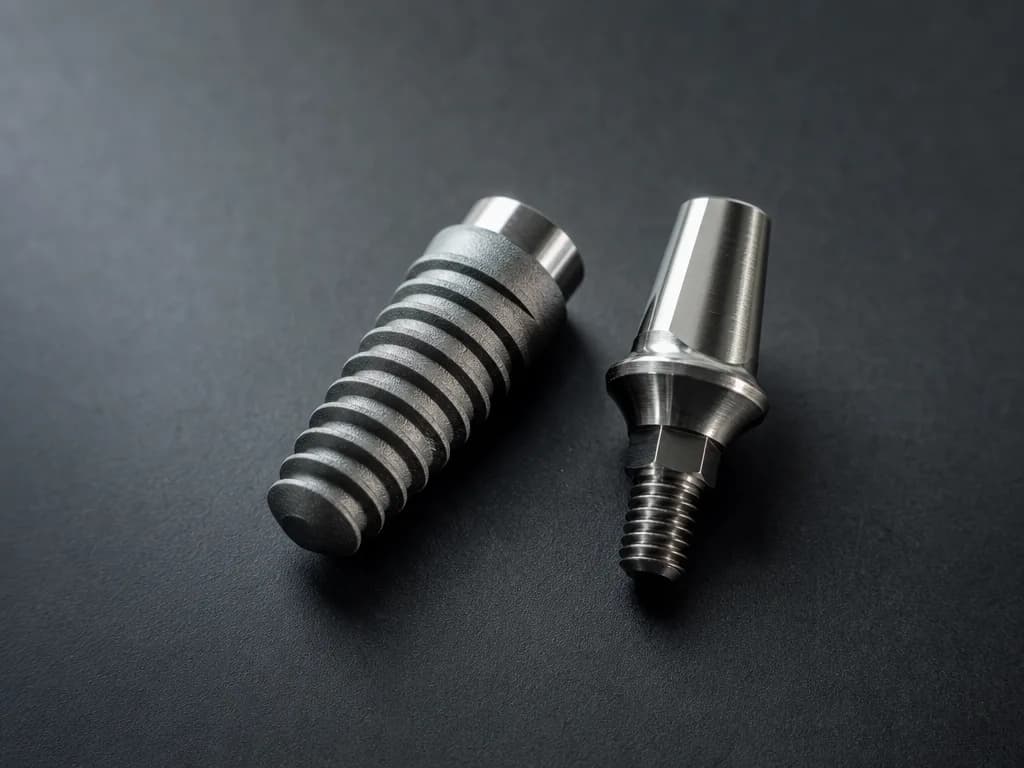
Bone volume. Implants need bone to sit in. All-on-4 was designed precisely for jaws that have lost bone: two implants go in at the front where bone is usually best preserved, and two go in at an angle towards the back, using what bone is there rather than requiring a graft. Six implants need six sites with enough bone to take them. If you do not have that, four well-placed implants are not a compromise — they are the plan.
Your bite. Chewing forces are not the same in every mouth or every jaw. The lower jaw generally works harder, and someone who grinds puts far more load through a restoration than someone who does not. More implants spread that load across more anchor points, which is why six comes up more often for lower arches and for heavy bites.
How long the bridge has to be. A bridge extending further back needs more support behind it. That is a mechanical question, not a preference.
None of these can be judged from a photograph. They come out of a CBCT scan and an examination. A clinic that names the number before it has seen your scan is quoting a package, not planning treatment — and that is the single most useful thing to notice while you are comparing.
So is six better?
Better at what? Six implants distribute load more widely and give more redundancy. They also mean more surgery, more healing, a higher price, and they require bone you may not have.
Four implants placed where the bone actually is will serve you better than six placed where it is thin. The number is an output of the plan, not an input to it.
If you are quoted All-on-6 and you want to understand why, ask exactly that: why six for me, and what would four look like? A clinic that has planned your case will have a clear answer involving your bone and your bite. One that has not will talk about six being stronger in general.
What recovery is actually like
Worth being plain about, because it is the part the marketing skips.
This is real surgery. Expect swelling and bruising, expect a soft diet for a week or two, and expect to feel rough for the first few days. Both procedures are done under local anaesthetic with sedation available if you want it, and neither is agony — but you should plan the trip around the treatment rather than around an itinerary.
Do not book anything strenuous for the first few days after surgery. If you are travelling with someone, that first week is where they earn their place.
Afterwards
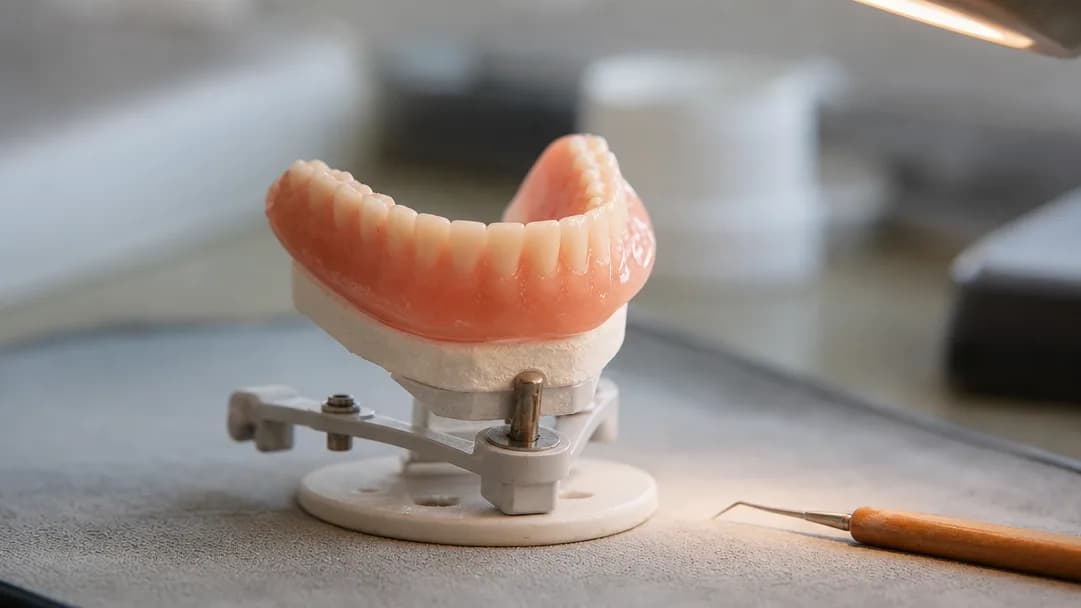
A fixed full-arch bridge is not maintenance-free. You clean under and around it daily with the tools you will be shown, and you see a hygienist regularly. Implants do not decay, but the gum and bone around them can become inflamed if plaque is left to sit there, and that is the main thing that puts a full-arch case at risk years later.
Anyone who tells you it is fit-and-forget is selling, not treating.
All-on-4 and All-on-6, side by side
| All-on-4 | All-on-6 | |
|---|---|---|
| Implants per arch | 4 | 6 |
| Typical reason | Reduced bone at the back of the arch | Enough bone throughout, and a heavy bite |
| Grafting | Often avoided — the back implants are angled | Sometimes needed to create six sites |
| Surgery | Shorter, fewer sites | Longer, more swelling in the first week |
| Redundancy | One failure affects the whole bridge | Load can be redistributed more easily |
| Cost | Lower | Higher — two more fixtures and the surgery to place them |
| Trips | Two | Two |
The row that decides it is the second one, and it is not something you choose.
What the bridge on top is made of
The implant count is only half the quote. The other half is the bridge, and the two options behave differently over the years.
Acrylic teeth on a titanium framework is the common permanent option. A milled bar carries acrylic teeth, and if a tooth chips it can usually be repaired without remaking the whole arch. The acrylic wears and discolours over time and will need refurbishing at some point — which is a known, budgetable event rather than a failure.
Monolithic zirconia is milled from a single block. It resists wear far better and is the usual recommendation for a heavy bite, which means it often comes up alongside All-on-6 for the same reason. It costs considerably more, and if it fractures the repair is a remake rather than a chairside fix.
Ask which one a quote includes. A price that looks unusually competitive next to another is sometimes comparing acrylic against zirconia rather than four implants against six.
Questions worth asking before you agree to either
- Why this number for me — what does my scan show?
- What would the other option look like, and what would it cost?
- Is any grafting needed to make six sites possible, and how many months does that add?
- What material is the final bridge, and what is the temporary?
- Who removes the bridge for cleaning or repair when I am back in the UK, and what do they need to know to do it?
The last one is the one people forget. A full-arch bridge is screw-retained: someone has to be able to take it off. That means the implant system, the screw type and the driver, written down and handed to you before you fly home.
Who should not have either
Being told no is information, not rejection. Neither treatment is the right answer if most of your teeth are sound — clearing an arch to simplify treatment is a trade very few people should make, and a second opinion is worth the delay. It is also the wrong answer if gum disease or general health has not been stabilised first, since this is major implant surgery, or if you cannot commit to the second trip and to hygienist maintenance afterwards.
Where a fixed bridge is out of reach, an implant-retained overdenture clips onto two or four implants and comes out for cleaning. It is more stable than a conventional denture, considerably cheaper than a fixed arch, and far easier to keep clean — a real option rather than a consolation.
Getting an answer for your own case
Both procedures, what they cost and how the trips work are set out on the All-on-4 and All-on-6 pages. Which one suits you is decided from a scan and an examination — we do that in the UK before anything is booked, precisely so this decision is made with the information rather than around it.
If you have already been quoted for one of them elsewhere, send it to us. We will tell you what we would do differently and why, including if the answer is nothing.